
Aloha,
We only managed to operate one Whale Watch Cruise on Monday before a cold front moved in to our part of the island bringing extremely strong onshore winds. But guests who chose to get up early enough to join us on our Wake Up with the Whales Cruise experienced smooth seas and some pretty incredible sightings.
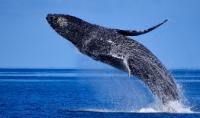
Before we had even left the bay, we saw some spouts just outside the mouth of the bay and a bit to the south so we were all set to head that way when BAM — a lone Humpback closer to us started breaching. Over the course of about 45 minutes, this whale breached completely out of the water at least 8 different times. Of course we weren’t moving, but neither was he (except for up and down) — every breach was just about 100 yards from us. For awhile, we thought the original duo we had sighted was moving towards our breacher, but though they seemed to change directions when the breaching began, they never got closer than about 200 yards. After our breacher stopped breaching (and we thought the activity was over) he surprised us all by beginning to tail lob. We weren’t positive, but all the tail lobbing seemed directed towards our original pair of Humpbacks. We love to try to interpret all these interactions, and our best guess is that our lone Humpback was expressing a “don’t come closer” message to the pair. If that was the case, the message was received, because those three Humpbacks didn’t join together (at least while we were watching).
Mahalo,
Claire
Ocean Sports Whale Fact of the Day: One of the questions we get asked most frequently on whale watches, is “Why are the whales doing that?” (and for “that”, you can substitute any whale behavior we see…breaches, head lunges, peduncle throws…etc). Since we really can’t ask the whales (well, we can ask, but they aren’t answering) we tend to interpret behavior based on what else is going on in the whales’ lives at that particular time. Humpbacks are in Hawaii to mate, calve, and take care of their babies. Aerial behaviors often result in big splashes which may be a great way for a whale to communicate size, status, location, excitement, aggression, irritation, or health to other whales (or to something/someone else he hears on the surface).