
Aloha,
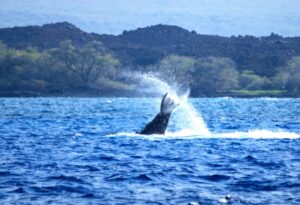
After some really crazy weather, we finally were able to get out to watch some whales on Friday. Guests on our Wake up with the Whales Cruise watched a competitive pod of 4 whales for most of the trip. These 4 took turns peduncle throwing and tail lobbing, and we even got to see several breaches from them. There were other whales surfacing and spouting all around us but none of them were staying on the surface for very long. We were able to deploy our hydrophone during this cruise and heard a lot of different whale voices, and they were loud too — so we know there were some underwater whales close by who weren’t choosing to surface near us.
Our Late Morning Whale Watch began with a juvenile whale who was breaching his way out to sea. We watched him breach and head lunge multiple times as he headed west. He appeared to be by himself, so we weren’t sure what was prompting all the activity. Maybe he was entertaining himself? Or maybe his skin was itchy and he was trying to rid himself of barnacles and remoras? Later in the cruise we spent some time with a couple of different Humpback duos. Each of these duos had long dive times, but since they weren’t synchronized, we didn’t have to wait very long between dives before someone else was spouting somewhere else. The wind picked up during this cruise, so though we tried to deploy the hydrophone, the gusts were blowing the boat around and we found ourselves listening more to feedback from the microphone than to songs from Humpbacks.
Mahalo,
Claire
Ocean Sports Whale Fact of the Day: Humpback Whales play host to all kinds of other animals. Besides the barnacles we often see on the Humpbacks’ flukes and other skin surfaces, the whales can also carry tape worms, lung worms, sinus flukes, and whale lice (which are related to skeleton shrimp) among others. Not all of these parasites actually harm the whale (which means that technically, they can’t really all be considered “parasites”). In fact, the barnacles might actually benefit the male Humpbacks who appear to use the sharp edges of the shells (perhaps inadvertently) as weapons during competitive battles