
 Aloha,
As we headed out of the bay for Tuesday’s Late Morning Whale Watch Cruise we were crossing our fingers that all of the Humpbacks hadn’t migrated away from the island during all those intense storms that have passed through the area the past few days. Captain Will decided to take a right turn out of the bay and headed us north.
As we travelled, we all kept our heads on swivels looking for evidence of Humpbacks in every direction. We stopped the boat to deploy our hydrophone and we actually heard a few Humpback voices, so that worked to keep our spirits up — even if we couldn’t see them, at least we knew there were still a few whales in the area.
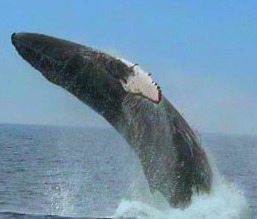
It wasn’t until about 40 minutes into the cruise that we finally saw a spout from a lone whale offshore of Puako. We breathed a collective sigh of relief and headed over to see what we could see. All of a sudden, seemingly out of nowhere, our lone Humpback breached. And then he breached again…and again… and again…for a total of 10 breaches, and all that time he stayed about 130 yards from our boat. Just when we thought he had tired himself out, he started pec slapping and then tail lobbing. We could hardly tear our eyes away from all the activity, but we still scanned around to see if our Humpback was communicating something to another whale nearby. For as long as we were able to watch, the only other Humpback we saw was spouting way out to sea, so we really have no idea why our whale was so active at the surface. Maybe our whale was trying to fling some itchy parasites off his body, or maybe he was communicating his location or health or exuberance to whales we couldn’t see, or maybe he was just messing around. Regardless of the reason, we were really glad we were there to witness it all.
Mahalo,
Claire
Ocean Sports Whale Fact of the Day: What does a Humpback whale drink? We know the Humpback doesn’t sip on ocean water – he can’t because he’s a mammal and the salinity of his tissues is less than that of the ocean (so, like us, if he drank salt water, he’d dehydrate and die). We also know there’s no fresh water to drink from in the ocean. When the whale is feeding, we know he gets liquid from the tissues of the fish he’s digesting…and we know calves get liquid from their mother’s milk. But how does the Humpback survive through the breeding season when he’s not feeding? It turns out that one of the main by-products of fat metabolism is the production of water. Humpbacks burn a lot of fat during the breeding season and because they are much more efficient users of the water they produce, they can survive. They don’t have tear ducts, sweat glands or salivary glands…and they have incredibly efficient kidneys which concentrate salt in their urine.